
Stikkord: BBC
-
Enclosure 4, Letter sent BBC, 6/2.
From: eribsskog@gmail.com Erik Ribsskog
To: info@bbc.co.uk
Date: Fri, 23 Nov 2007 05:35:08 +0000
Subject: Fwd: Complaint/Fwd: Your BBC Posting has been removedHi,
I cant see that I have recieved an answer to this e-mail yet, that’s why I’m
trying to send it again.Hope that this is alright!
Yours sincerely,
Erik Ribsskog
———- Forwarded message ———-
From: Erik Ribsskog <eribsskog@gmail.com>
Date: Nov 6, 2007 2:17 AM
Subject: Complaint/Fwd: Your BBC Posting has been removed
To: info@bbc.co.ukHi,
I haven’t recieved any answer to this e-mail, from the message-board
moderators,
even if I have been sending it twice to themSo I was hoping that you maybe would have the chance to have a look at this.
Yours sincerely,
Erik Ribsskog
———- Forwarded message ———-
From: Erik Ribsskog <eribsskog@gmail.com>
Date: Oct 26, 2007 1:06 AM
Subject: Fwd: Your BBC Posting has been removed
To: England.moderators@bbc.co.ukHi,
I can’t see that I have recieved an answer to this e-mail yet, thats why I’m
trying to send it again.Hope that this is alright!
Yours sincerely,
Erik Ribsskog
———- Forwarded message ———-
From: Erik Ribsskog < eribsskog@gmail.com>
Date: Oct 13, 2007 8:34 PM
Subject: Re: Your BBC Posting has been removed
To: England < England.moderators@bbc.co.uk>Hi,
I was wondering if you think it would be possible for me to get a more
spesific reason on why the post
was removed?Yours sincerely,
Erik Ribsskog
On 12 Oct 2007 15:57:47 +0000, England < England.moderators@bbc.co.uk>
wrote:
>
> Dear BBC Community member,
>
> Thank you for contributing to a BBC community site. Unfortunately we’ve
> had to remove your content below because it contravened one of the House
> Rules.
>
> Postings to BBC messageboards will be removed if they:
>
> *Break the law, or condone or encourage unlawful activity. This includes
> defamation and contempt of court.
>
> You can find out more about Defamation at
> http://www.bbc.co.uk/dna/hub/HouseRules-Defamation
> You can read the BBC messageboards House Rules in full here:
> http://www.bbc.co.uk/messageboards/newguide/popup_house_rules.html
>
> Please be careful when you copy the text of someone else’s message into
> your post. If their posting is subsequently removed, your posting may also
> have been removed, as it contained a copy of their failed text.
>
> If you can rewrite your contribution to remove the problem, we’d be happy
> for you to post it again.
>
> Please note that anyone who seriously or repeatedly breaks the House Rules
> may have action taken against their account.
>
> http://www.bbc.co.uk/messageboards/newguide/popup_breaking_rules.html
>
> Regards,
>
> The BBC Communities Team
> http://www.bbc.co.uk/messageboards/newguide/
>
> URL of content (now removed):
> http://www.bbc.co.uk/dna/england/F2770282?Thread=4653901&post=54093182
>
> Subject:
> The use of Negative Reinforcement as a Management-method at the Arvato
> Microsoft Scandinavian Product Activation in Liverpool.
>
> Posting:
> When I was working at the Arvato Microsoft Scandinavian Product Activation
> in Liverpool, I had a meeting with one of the team-leaders on the campaign.
>
> I was wondering why we, (I was working as a regular Contact Centre
> Representative there), and I was wondering why we got lines like ‘NN, you’re
> on wrap-up’, shouted at us across the tables, from the team-leaders.
>
> Then I got to hear that this was something that the team-leaders had been
> thought during team-leader training.
>
> The team-leader I was in the meeting with, told me, that they had been
> trained using ‘[negative] reinforcement’, during the team-leader training.
>
> She explained to me, that she wouldn’t stop with the
> shouting/complaining/’giving stick’, the way she did, because this was the
> way they had been trained to lead the campaign.
>
> Here is a quote from the summary from this meeting:
>
> ‘I also brought up the situation with the wrap-up meeting we had some
> weeks earlier, where
> we agreed on that I would work on gradually bettering the wrap-up time,
> but that she then
> forgot this agreement, and the next day acted like this meeting hadnt been
> taking place
> at all, and continued to shout ‘You’re on wrap-up’ if the wrap-up time
> exceeded 5 seconds.
>
> Vivian explained that this was call reinforcement, and that the
> team-leaders were trained
> to use reinforcement as a way of solving problems, like the problem with
> agents being
> to long time on wrap-up between the calls. So she wouldnt stop doing this,
> because she
> had been trained to do her job this way.
>
>
> NEGATIVE REINFORCEMENT
>
> I hadnt heard about reinforcement on the management/organisation modules I
> had studied on
> upper secondary and university-level, and neighter had I heard about it on
> the management-
> courses I had participated on while I was working as a manager in Norway.
>
> So when I got home on the day we had the meeting, I searched for
> ‘reinforcement’ on the
> internet. I found from how Vivian described it in the meeting, that this
> way of sorting
> problems was called ‘negative reinforcement’.
>
> I couldnt find very much on how this was being used in management, but
> from what I found
> it seemed like it was more used as a way of training dogs, and that it was
> known to make
> the dogs nervous.
>
> Line says that they were told to do it this way, because if they did it
> this way, then the agents
> would do the job the way the team-leaders wanted.’.
>
> Link: https://johncons-blogg.net/2007/10/enclosure-7.html
>
>
> My issue, regarding this, was that when I was searching on the term
> ‘negative reinforcement’, on the internet, then it mostly appeared links
> that had to do with the training of animals, like dogs and horses. (And not
> so much with management-theory):
>
> Link: http://www.google.co.uk/search?hl=en&q=negative+reinforcement&meta=cr%3DcountryUK%7CcountryGB
>
>
>
> And, the fact that the team-leaders are screaming things like ‘You’re on
> wrap-up’, to the CCR representatives.
>
> I think this is a bit impolite, because the places were people are seated,
> are up to the region of 5-10 meters from were the team-leader is sitting
> shouting.
>
> So I remember I myself thought this practice was a bit inpolite towards
> the representatives.
>
> And also, I thought it was interfering in the work.
>
> That is, if one are sitting, and writing some notes, or if one are loging
> the latest call.
>
> The latest call from when someone has called in to activate Windows or
> Office etc.
>
> Then one had five seconds to log the call and to prepare for the next
> call.
>
> So sometimes one ran out of time, and sometimes, one also wanted to have a
> zip of water inbetween the calls, so sometimes five seconds could be maybe a
> bit to little time.
>
> But the point is, that when the call wasn’t a regular call. That is, if
> the call lasted for longer than about five minutes, then one had to log the
> call on a form as well as on the screen.
>
> And if it was a company-call, a Microsoft customer, then it could be that
> one had to write some notes down, since these calls sometimes were a bit
> more complex than the regular calls.
>
> And also since there was a lot of types of agreements, like
> Select-agreement, Open-agreement, etc.
>
> There were meny combinations of different agreements and products, so
> sometimes, one happened to write down some notes, and also send e-mails to
> the line-managers about the activation.
>
> So if one were busy doing things like this, then I think the shouting was
> sometimes interfering a bit with the other work.
>
> Because, often, it wouldn’t be possible to do work-tasks like this, while
> one were answering the next call simultaniously.
>
> Because one needed to consentrate on the loging and the writing og notes
> and e-mails.
>
> So then it interfered a bit when someone shouted at me: ‘Erik, you’re on
> wrap-up’. At least I remember that I thought this personally.
>
> Because then I lost my concentration, and my awarenes of what I was doing.
> And I sometimes got a bit stressed, and I maybe started thinking about
> things regarding the organisation of the campaign instead.
>
> And I also think that this practice is a bit condescend.
>
> That is, from the team-leader to the representative. It seems to me, that
> one are shouting like this, then it means that one thinks that the
> representative isn’t using his time in a meaningful way. That is, it means
> that the representative is doing something wrong.
>
> I tried telling them, that we knew from before, that the wrap-up time was
> five seconds, and that they didn’t really need to shout that out, because we
> already knew this from before.
>
> And when one used more time than five seconds, it was because it was
> needed to finish the work-tasks.
>
> But when they were shouting, then I think it means that they didn’t belive
> the representative would be able to manage the time for the work-tasks
> themselves, in a reasonble way.
>
> So then I guess it means that the representatives was looked at as to be
> thoughtless and without the ability to act reasonable.
>
> I thought this meant that the representatives, were looked down upon, in
> regards to the issue of being able to manage their own work-time in a
> meaningful way.
>
> So I myself, remember, that I was thinking that this practice was a bit
> condescend.
>
> I used to work as a store-manager in Norway, and in conection with that, I
> had a few courses in practical management etc.
>
> And I also had some modules in management and organisation, from upper
> secondary school level, and also from university level.
>
> But I can’t remember, that we were taught were much about ‘negative
> reinforcement’ in those modules and couses.
>
> So I was wondering if someone maybe had some knowledge, regarding where
> negative reinforcement fits in, in relation to the management-theory field.
>
> I think that management is an interesting field, so I think it would be
> very fine if someone have the time to contribute a bit to the thread on
> this.
>
> I myself, think that this management-method, can maybe sometimes seem a
> bit harassing, but I think it would be very interesting to also hear what
> other people think about this.
>
>
>
>
>
> This e-mail, and any attachment, is confidential. If you have received
> it in error, please delete it from your system, do not use or disclose
> the information in any way, and notify us immediately. The contents of
> this message may contain personal views which are not the views of the
> BBC, unless specifically stated.
>
> -
Enclosure 3, Letter sent BBC, 6/2.
From: eribsskog@gmail.com Erik Ribsskog
To: England.moderators@bbc.co.uk
Date: Tue, 6 Nov 2007 01:53:33 +0000
Subject: Fwd: Problems with message-boardHi,
I can’t see that I have recieved an answer to this e-mail yet, thats why I’m
trying
to send it again.Yours sincerely,
Erik Ribsskog
———- Forwarded message ———-
From: Erik Ribsskog <eribsskog@gmail.com>
Date: Oct 31, 2007 11:11 AM
Subject: Problems with message-board
To: England.moderators@bbc.co.ukHi,
I’ve been having some problems with the BBC message-board lately.
I’ve been trying to post a post about some problems at the local CAB.
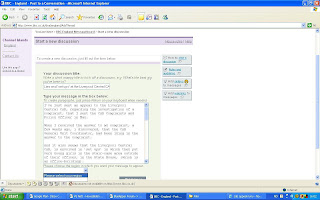
But the message-board programme just shows an error message,
like this: ‘Please choose the region in which you want your message to
appear.’.But the web-application wont let me choose a region.
The region field is empty.
I’ll try to take scree-shot of the screen:
(I’m also going to attach a copy of the screen-shot, in case it easier for
you to view thescreenshot-copy as an enclosure.)
I’ve tried to use both Internet Explorer and Firefox, to post the message,
but I’m getting thesame problem with both programs.
I’ve been trying to post this message for about three days now, but I
haven’t managed toget it posted on the message board yet, due to the mentioned problem.
Here is the post, by the way, in case it has occured some problems with the
post moderatedmoderation system on the message board, (like I have experienced with your
message boardearlier):
‘Lies and ‘set ups’ at the Liverpool Central CAB.
I’ve just sent an appeal to the Liverpool Central CAB, regarding the
investigation of a complaint, that I sent the CAB Complaints and Policy
Officer in May.When I received the answer to my complaint, a few weeks ago, i discovered,
that the CAB General Unit Coordinator, had been lying in the answer to the
complaint.And it also seems that the Liverpool Central CAB, is envolved in ‘set ups’
in which they put very young girls in the stair-case area outside of their
offices, in the State House, (which is an office-building).And then they keep the lights off in the pulic areas of their offices, while
the members of the public are kept waiting in the dark, for about 5-10
minutes, before most of the meeting is also being kept in the dark. (In
about twilight-strength light, it was to dark to read a regular
information-folder there).And also the Liverpool Central CAB, has got the wrong e-mail address on
their webpages.It’s says on their website(http://www.liverpoolcab.org) that one can contact
them on this e-mail address:bureau@liverpoolcab.f9.co.uk
But this is wrong, I had to send the General Unit Coordinator a new e-mail
to get right e-mail address for the CAB, (which was bureau@liverpoolcab.org
).So I was wondering what other people were thinking about these problems, and
if someone have some advice on how I should go forward in dealing with these
issues.That is, besides the complaint I’ve already sent to The Chair, Liverpool
Central CAB:http://johncons.blog.co.uk/2007/10/27/title~3201650
Because I think this kind behaviour, from the CAB, is totally out of line,
and also disgraceful for an organisation, if it wants to be respected.So I was just wondering what other people were thinking about this.’.
So, I was wondering if you please have got some advice, on how I should go
forward to sort this problem withselecting the region.
Also, while I’m writing so to speak, I was wondering if you have had a
chance to have a look at the e-mailI sent you again on 26/10 yet?
Here is a copy of that e-mail:
‘From: eribsskog@gmail.com Erik Ribsskog
To: England.moderators@bbc.co.uk
Date: Fri, 26 Oct 2007 01:06:13 +0000
Subject: Fwd: Your BBC Posting has been removed
Hi,
I can’t see that I have recieved an answer to this e-mail yet, thats why I’m
trying to send it again.
Hope that this is alright!
Yours sincerely,
Erik Ribsskog
———- Forwarded message ———-
From: Erik Ribsskog <eribsskog@gmail.com>
Date: Oct 13, 2007 8:34 PM
Subject: Re: Your BBC Posting has been removed
To: England <England.moderators@bbc.co.uk>
Hi,
I was wondering if you think it would be possible for me to get a more
spesific reason on why the post
was removed?
Yours sincerely,
Erik Ribsskog
On 12 Oct 2007 15:57:47 +0000, England <England.moderators@bbc.co.uk>
wrote:
>
> Dear BBC Community member,
>
> Thank you for contributing to a BBC community site. Unfortunately we’ve
> had to remove your content below because it contravened one of the House
> Rules.
>
> Postings to BBC messageboards will be removed if they:
>
> *Break the law, or condone or encourage unlawful activity. This includes
> defamation and contempt of court.
>
> You can find out more about Defamation at
> http://www.bbc.co.uk/dna/hub/HouseRules-Defamation
> You can read the BBC messageboards House Rules in full here:
> http://www.bbc.co.uk/messageboards/newguide/popup_house_rules.html
>
> Please be careful when you copy the text of someone else’s message into
> your post. If their posting is subsequently removed, your posting may also
> have been removed, as it contained a copy of their failed text.
>
> If you can rewrite your contribution to remove the problem, we’d be happy
> for you to post it again.
>
> Please note that anyone who seriously or repeatedly breaks the House Rules
> may have action taken against their account.
>
> http://www.bbc.co.uk/messageboards/newguide/popup_breaking_rules.html
>
> Regards,
>
> The BBC Communities Team
> http://www.bbc.co.uk/messageboards/newguide/
>
> URL of content (now removed):
> http://www.bbc.co.uk/dna/england/F2770282?Thread=4653901&post=54093182
>
> Subject:
> The use of Negative Reinforcement as a Management-method at the Arvato
> Microsoft Scandinavian Product Activation in Liverpool.
>
> Posting:
> When I was working at the Arvato Microsoft Scandinavian Product Activation
> in Liverpool, I had a meeting with one of the team-leaders on the
campaign.>
> I was wondering why we, (I was working as a regular Contact Centre
> Representative there), and I was wondering why we got lines like ‘NN,
you’re> on wrap-up’, shouted at us across the tables, from the team-leaders.
>
> Then I got to hear that this was something that the team-leaders had been
> thought during team-leader training.
>
> The team-leader I was in the meeting with, told me, that they had been
> trained using ‘[negative] reinforcement’, during the team-leader training.
>
> She explained to me, that she wouldn’t stop with the
> shouting/complaining/’giving stick’, the way she did, because this was the
> way they had been trained to lead the campaign.
>
> Here is a quote from the summary from this meeting:
>
> ‘I also brought up the situation with the wrap-up meeting we had some
> weeks earlier, where
> we agreed on that I would work on gradually bettering the wrap-up time,
> but that she then
> forgot this agreement, and the next day acted like this meeting hadnt been
> taking place
> at all, and continued to shout ‘You’re on wrap-up’ if the wrap-up time
> exceeded 5 seconds.
>
> Vivian explained that this was call reinforcement, and that the
> team-leaders were trained
> to use reinforcement as a way of solving problems, like the problem with
> agents being
> to long time on wrap-up between the calls. So she wouldnt stop doing this,
> because she
> had been trained to do her job this way.
>
>
> NEGATIVE REINFORCEMENT
>
> I hadnt heard about reinforcement on the management/organisation modules I
> had studied on
> upper secondary and university-level, and neighter had I heard about it on
> the management-
> courses I had participated on while I was working as a manager in Norway.
>
> So when I got home on the day we had the meeting, I searched for
> ‘reinforcement’ on the
> internet. I found from how Vivian described it in the meeting, that this
> way of sorting
> problems was called ‘negative reinforcement’.
>
> I couldnt find very much on how this was being used in management, but
> from what I found
> it seemed like it was more used as a way of training dogs, and that it was
> known to make
> the dogs nervous.
>
> Line says that they were told to do it this way, because if they did it
> this way, then the agents
> would do the job the way the team-leaders wanted.’.
>
> Link: https://johncons-blogg.net/2007/10/enclosure-7.html
>
>
> My issue, regarding this, was that when I was searching on the term
> ‘negative reinforcement’, on the internet, then it mostly appeared links
> that had to do with the training of animals, like dogs and horses. (And
not> so much with management-theory):
>
> Link:
http://www.google.co.uk/search?hl=en&q=negative+reinforcement&meta=cr%3DcountryUK%7CcountryGB>
>
>
> And, the fact that the team-leaders are screaming things like ‘You’re on
> wrap-up’, to the CCR representatives.
>
> I think this is a bit impolite, because the places were people are seated,
> are up to the region of 5-10 meters from were the team-leader is sitting
> shouting.
>
> So I remember I myself thought this practice was a bit inpolite towards
> the representatives.
>
> And also, I thought it was interfering in the work.
>
> That is, if one are sitting, and writing some notes, or if one are loging
> the latest call.
>
> The latest call from when someone has called in to activate Windows or
> Office etc.
>
> Then one had five seconds to log the call and to prepare for the next
> call.
>
> So sometimes one ran out of time, and sometimes, one also wanted to have a
> zip of water inbetween the calls, so sometimes five seconds could be maybe
a> bit to little time.
>
> But the point is, that when the call wasn’t a regular call. That is, if
> the call lasted for longer than about five minutes, then one had to log
the> call on a form as well as on the screen.
>
> And if it was a company-call, a Microsoft customer, then it could be that
> one had to write some notes down, since these calls sometimes were a bit
> more complex than the regular calls.
>
> And also since there was a lot of types of agreements, like
> Select-agreement, Open-agreement, etc.
>
> There were meny combinations of different agreements and products, so
> sometimes, one happened to write down some notes, and also send e-mails to
> the line-managers about the activation.
>
> So if one were busy doing things like this, then I think the shouting was
> sometimes interfering a bit with the other work.
>
> Because, often, it wouldn’t be possible to do work-tasks like this, while
> one were answering the next call simultaniously.
>
> Because one needed to consentrate on the loging and the writing og notes
> and e-mails.
>
> So then it interfered a bit when someone shouted at me: ‘Erik, you’re on
> wrap-up’. At least I remember that I thought this personally.
>
> Because then I lost my concentration, and my awarenes of what I was doing.
> And I sometimes got a bit stressed, and I maybe started thinking about
> things regarding the organisation of the campaign instead.
>
> And I also think that this practice is a bit condescend.
>
> That is, from the team-leader to the representative. It seems to me, that
> one are shouting like this, then it means that one thinks that the
> representative isn’t using his time in a meaningful way. That is, it means
> that the representative is doing something wrong.
>
> I tried telling them, that we knew from before, that the wrap-up time was
> five seconds, and that they didn’t really need to shout that out, because
we> already knew this from before.
>
> And when one used more time than five seconds, it was because it was
> needed to finish the work-tasks.
>
> But when they were shouting, then I think it means that they didn’t belive
> the representative would be able to manage the time for the work-tasks
> themselves, in a reasonble way.
>
> So then I guess it means that the representatives was looked at as to be
> thoughtless and without the ability to act reasonable.
>
> I thought this meant that the representatives, were looked down upon, in
> regards to the issue of being able to manage their own work-time in a
> meaningful way.
>
> So I myself, remember, that I was thinking that this practice was a bit
> condescend.
>
> I used to work as a store-manager in Norway, and in conection with that, I
> had a few courses in practical management etc.
>
> And I also had some modules in management and organisation, from upper
> secondary school level, and also from university level.
>
> But I can’t remember, that we were taught were much about ‘negative
> reinforcement’ in those modules and couses.
>
> So I was wondering if someone maybe had some knowledge, regarding where
> negative reinforcement fits in, in relation to the management-theory
field.>
> I think that management is an interesting field, so I think it would be
> very fine if someone have the time to contribute a bit to the thread on
> this.
>
> I myself, think that this management-method, can maybe sometimes seem a
> bit harassing, but I think it would be very interesting to also hear what
> other people think about this.
>
>
>
>
>
> This e-mail, and any attachment, is confidential. If you have received
> it in error, please delete it from your system, do not use or disclose
> the information in any way, and notify us immediately. The contents of
> this message may contain personal views which are not the views of the
> BBC, unless specifically stated.
>
>’.
I hope you have a chance to have a look at this, and thanks in advance for
the help!Yours sincerely,
Erik Ribsskog
-
Enclosure 2, Letter sent BBC, 6/2.
From: eribsskog@gmail.com Erik Ribsskog
To: England.moderators@bbc.co.uk
Date: Fri, 26 Oct 2007 01:06:13 +0000
Subject: Fwd: Your BBC Posting has been removedHi,
I can’t see that I have recieved an answer to this e-mail yet, thats why I’m
trying to send it again.Hope that this is alright!
Yours sincerely,
Erik Ribsskog
———- Forwarded message ———-
From: Erik Ribsskog <eribsskog@gmail.com>
Date: Oct 13, 2007 8:34 PM
Subject: Re: Your BBC Posting has been removed
To: England <England.moderators@bbc.co.uk>Hi,
I was wondering if you think it would be possible for me to get a more
spesific reason on why the post
was removed?Yours sincerely,
Erik Ribsskog
On 12 Oct 2007 15:57:47 +0000, England <England.moderators@bbc.co.uk>
wrote:
>
> Dear BBC Community member,
>
> Thank you for contributing to a BBC community site. Unfortunately we’ve
> had to remove your content below because it contravened one of the House
> Rules.
>
> Postings to BBC messageboards will be removed if they:
>
> *Break the law, or condone or encourage unlawful activity. This includes
> defamation and contempt of court.
>
> You can find out more about Defamation at
> http://www.bbc.co.uk/dna/hub/HouseRules-Defamation
> You can read the BBC messageboards House Rules in full here:
> http://www.bbc.co.uk/messageboards/newguide/popup_house_rules.html
>
> Please be careful when you copy the text of someone else’s message into
> your post. If their posting is subsequently removed, your posting may also
> have been removed, as it contained a copy of their failed text.
>
> If you can rewrite your contribution to remove the problem, we’d be happy
> for you to post it again.
>
> Please note that anyone who seriously or repeatedly breaks the House Rules
> may have action taken against their account.
>
> http://www.bbc.co.uk/messageboards/newguide/popup_breaking_rules.html
>
> Regards,
>
> The BBC Communities Team
> http://www.bbc.co.uk/messageboards/newguide/
>
> URL of content (now removed):
> http://www.bbc.co.uk/dna/england/F2770282?Thread=4653901&post=54093182
>
> Subject:
> The use of Negative Reinforcement as a Management-method at the Arvato
> Microsoft Scandinavian Product Activation in Liverpool.
>
> Posting:
> When I was working at the Arvato Microsoft Scandinavian Product Activation
> in Liverpool, I had a meeting with one of the team-leaders on the campaign.
>
> I was wondering why we, (I was working as a regular Contact Centre
> Representative there), and I was wondering why we got lines like ‘NN, you’re
> on wrap-up’, shouted at us across the tables, from the team-leaders.
>
> Then I got to hear that this was something that the team-leaders had been
> thought during team-leader training.
>
> The team-leader I was in the meeting with, told me, that they had been
> trained using ‘[negative] reinforcement’, during the team-leader training.
>
> She explained to me, that she wouldn’t stop with the
> shouting/complaining/’giving stick’, the way she did, because this was the
> way they had been trained to lead the campaign.
>
> Here is a quote from the summary from this meeting:
>
> ‘I also brought up the situation with the wrap-up meeting we had some
> weeks earlier, where
> we agreed on that I would work on gradually bettering the wrap-up time,
> but that she then
> forgot this agreement, and the next day acted like this meeting hadnt been
> taking place
> at all, and continued to shout ‘You’re on wrap-up’ if the wrap-up time
> exceeded 5 seconds.
>
> Vivian explained that this was call reinforcement, and that the
> team-leaders were trained
> to use reinforcement as a way of solving problems, like the problem with
> agents being
> to long time on wrap-up between the calls. So she wouldnt stop doing this,
> because she
> had been trained to do her job this way.
>
>
> NEGATIVE REINFORCEMENT
>
> I hadnt heard about reinforcement on the management/organisation modules I
> had studied on
> upper secondary and university-level, and neighter had I heard about it on
> the management-
> courses I had participated on while I was working as a manager in Norway.
>
> So when I got home on the day we had the meeting, I searched for
> ‘reinforcement’ on the
> internet. I found from how Vivian described it in the meeting, that this
> way of sorting
> problems was called ‘negative reinforcement’.
>
> I couldnt find very much on how this was being used in management, but
> from what I found
> it seemed like it was more used as a way of training dogs, and that it was
> known to make
> the dogs nervous.
>
> Line says that they were told to do it this way, because if they did it
> this way, then the agents
> would do the job the way the team-leaders wanted.’.
>
> Link: https://johncons-blogg.net/2007/10/enclosure-7.html
>
>
> My issue, regarding this, was that when I was searching on the term
> ‘negative reinforcement’, on the internet, then it mostly appeared links
> that had to do with the training of animals, like dogs and horses. (And not
> so much with management-theory):
>
> Link: http://www.google.co.uk/search?hl=en&q=negative+reinforcement&meta=cr%3DcountryUK%7CcountryGB
>
>
>
> And, the fact that the team-leaders are screaming things like ‘You’re on
> wrap-up’, to the CCR representatives.
>
> I think this is a bit impolite, because the places were people are seated,
> are up to the region of 5-10 meters from were the team-leader is sitting
> shouting.
>
> So I remember I myself thought this practice was a bit inpolite towards
> the representatives.
>
> And also, I thought it was interfering in the work.
>
> That is, if one are sitting, and writing some notes, or if one are loging
> the latest call.
>
> The latest call from when someone has called in to activate Windows or
> Office etc.
>
> Then one had five seconds to log the call and to prepare for the next
> call.
>
> So sometimes one ran out of time, and sometimes, one also wanted to have a
> zip of water inbetween the calls, so sometimes five seconds could be maybe a
> bit to little time.
>
> But the point is, that when the call wasn’t a regular call. That is, if
> the call lasted for longer than about five minutes, then one had to log the
> call on a form as well as on the screen.
>
> And if it was a company-call, a Microsoft customer, then it could be that
> one had to write some notes down, since these calls sometimes were a bit
> more complex than the regular calls.
>
> And also since there was a lot of types of agreements, like
> Select-agreement, Open-agreement, etc.
>
> There were meny combinations of different agreements and products, so
> sometimes, one happened to write down some notes, and also send e-mails to
> the line-managers about the activation.
>
> So if one were busy doing things like this, then I think the shouting was
> sometimes interfering a bit with the other work.
>
> Because, often, it wouldn’t be possible to do work-tasks like this, while
> one were answering the next call simultaniously.
>
> Because one needed to consentrate on the loging and the writing og notes
> and e-mails.
>
> So then it interfered a bit when someone shouted at me: ‘Erik, you’re on
> wrap-up’. At least I remember that I thought this personally.
>
> Because then I lost my concentration, and my awarenes of what I was doing.
> And I sometimes got a bit stressed, and I maybe started thinking about
> things regarding the organisation of the campaign instead.
>
> And I also think that this practice is a bit condescend.
>
> That is, from the team-leader to the representative. It seems to me, that
> one are shouting like this, then it means that one thinks that the
> representative isn’t using his time in a meaningful way. That is, it means
> that the representative is doing something wrong.
>
> I tried telling them, that we knew from before, that the wrap-up time was
> five seconds, and that they didn’t really need to shout that out, because we
> already knew this from before.
>
> And when one used more time than five seconds, it was because it was
> needed to finish the work-tasks.
>
> But when they were shouting, then I think it means that they didn’t belive
> the representative would be able to manage the time for the work-tasks
> themselves, in a reasonble way.
>
> So then I guess it means that the representatives was looked at as to be
> thoughtless and without the ability to act reasonable.
>
> I thought this meant that the representatives, were looked down upon, in
> regards to the issue of being able to manage their own work-time in a
> meaningful way.
>
> So I myself, remember, that I was thinking that this practice was a bit
> condescend.
>
> I used to work as a store-manager in Norway, and in conection with that, I
> had a few courses in practical management etc.
>
> And I also had some modules in management and organisation, from upper
> secondary school level, and also from university level.
>
> But I can’t remember, that we were taught were much about ‘negative
> reinforcement’ in those modules and couses.
>
> So I was wondering if someone maybe had some knowledge, regarding where
> negative reinforcement fits in, in relation to the management-theory field.
>
> I think that management is an interesting field, so I think it would be
> very fine if someone have the time to contribute a bit to the thread on
> this.
>
> I myself, think that this management-method, can maybe sometimes seem a
> bit harassing, but I think it would be very interesting to also hear what
> other people think about this.
>
>
>
>
>
> This e-mail, and any attachment, is confidential. If you have received
> it in error, please delete it from your system, do not use or disclose
> the information in any way, and notify us immediately. The contents of
> this message may contain personal views which are not the views of the
> BBC, unless specifically stated.
>
> -
Enclosure 1, Letter sent BBC, 6/2.
From: eribsskog@gmail.com Erik Ribsskog
To: England.moderators@bbc.co.uk
Date: Tue, 28 Aug 2007 13:51:12 +0000
Subject: Fwd: Your BBC Posting has been removedHi,
I can’t see that I have recieved an answer to this e-mail yet, so that’s why
I’m
trying to forward it again.Hope that this is alright!
Yours sincerely,
Erik Ribsskog
———- Forwarded message ———-
From: Erik Ribsskog <eribsskog@gmail.com>
Date: Aug 15, 2007 2:06 PM
Subject: Re: Your BBC Posting has been removed
To: England <England.moderators@bbc.co.uk>Hi,
thank you very much for your e-mail!
Just out interest, since I’m not so into these issues, do you think it would
be possible,
to get a reason, for what the problem is in particular, with the link that
wasn’t accepted?This since it would make it easier for me to know how to adapt to the rules,
since it’s
not clear to me at the moment, what it is, in particular, that was wrong
with the link.Hope that this is alright, and thank you very much for your help in advance!
Yours sincerely,
Erik Ribsskog
On 15 Aug 2007 11:21:45 +0000, England <England.moderators@bbc.co.uk>
wrote:
>
> Dear BBC Community member,
>
> Thank you for contributing to a BBC community site. Unfortunately we’ve
> had to remove your content below because it contravened one of the House
> Rules.
>
> Postings to BBC messageboards may be removed if they:
>
> * Contain links to other websites which break our Editorial Guidelines
>
> The URL(s) which failed were:
> http://johncons.angelfire.com/blog/
>
> Please read the messageboard external links Editorial Guidelines page, for
> more information:
>
> http://www.bbc.co.uk/messageboards/newguide/popup_editorial_guidelines.html
> You can read the BBC messageboards House Rules in full here:
> http://www.bbc.co.uk/messageboards/newguide/popup_house_rules.html
>
> Please be careful when you copy the text of someone else’s message into
> your post. If their posting is subsequently removed, your posting may also
> have been removed, as it contained a copy of their failed text.
>
> If you can rewrite your contribution to remove the problem, we’d be happy
> for you to post it again.
>
> Please note that anyone who seriously or repeatedly breaks the House Rules
> may have action taken against their account.
>
> http://www.bbc.co.uk/messageboards/newguide/popup_breaking_rules.html
>
> Regards,
>
> The BBC Communities Team
> http://www.bbc.co.uk/messageboards/newguide/
>
> URL of content (now removed):
> http://www.bbc.co.uk/dna/england/F2770282?Thread=4474744&post=52134546
>
> Subject:
> Problems with the Daily Post Message-board (Sensorship)
>
> Posting:
> Here is the link for the deleted thread: http://johncons.angelfire.com/blog/
>
>
> This e-mail, and any attachment, is confidential. If you have received
> it in error, please delete it from your system, do not use or disclose
> the information in any way, and notify us immediately. The contents of
> this message may contain personal views which are not the views of the
> BBC, unless specifically stated.
>
> -
Letter sent BBC, 6/2.
Erik Ribsskog
Flat 3
5 Leather Lane
Liverpool 6. February 2008
L2 2AE
British Broadcasting Corporation
Broadcasting House
Portland Place
London
W1 1AA
COMPLAINT
I’ve been having some problems with postings on the BBC message-board, being removed
for no obvious, to me at least, reason.
Then, I’ve been trying to write to the Moderators, to try to get them to explain to me, what
it is in particular, that is wrong with the message-board postings.
But I haven’t managed to recieve any answer to this e-mails.
So I think I have to try to complain about this.
The e-mails in question, are three e-mails I sent to england.moderators@bbc.co.uk, last
automn.
When I didn’t recieve any answer to the mentioned e-mails, then I also tryed to send
reminders about this, on 28/8, 26/10 and 6/11, of last, for the respective e-mails.
But I still didn’t recieve any answer to eighter the original e-mails, or the reminders.
So I tried to send a complaint about this, to info@bbc.co.uk, on 6/11, and then a
reminder, on 23/11, but I didn’t recieve any answer to any of these e-mails.
Then I tried to call the BBC customer support, on 0870 010 0222, on 3/1, and then
I got adviced, to send a web-mail, from the BBC website, since the BBC customer
service representative, thought that it was more likely to get an answer, if one
used the webmail-function, to send a complaint on the moderators, than if one
used the e-mail address, that I had been using, thats info@bbc.co.uk.
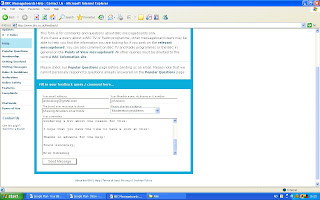
So I sent a web-mail, from the URL: http://bbc.co.uk/feedback, on 3/1, but I
haven’t recieved any answer to this web-mail yet, so I thought I should maybe
try to send a letter.
I’m enclosing copies of the mentioned e-mails, and I’m also going to enclose screen-shots,
taken of the web-mail message, which I sent from the http://bbc.co.uk/feedpack URL, on 3/1.
So I hope you have the chance to have a look at this, and thank you very much in advance
for your help!
Yours sincerely,Erik Ribsskog
-
Untitled Post
Hello johncons I’m not johncons
Retrieve my details
Sign outYour region is Liverpool Your nickname is johncons.Change this
House rules Help
Discussion:
Messages 1 – 18 of 18Message 1**, 5 Days Ago
This posting has been temporarily hidden, because a member of our Moderation Team has referred it to the Hosts for a decision as to whether it contravenes the House rules in some way. We will do everything we can to ensure that a decision is made as quickly as possible.
Message 2 – posted by Alan Amp, 4 Days Ago
Dear John, What the heck are you talking about ?
Your problem seems to be that you have a very shallow knowledge of your subject and have not grasped the Nettle as they say.. We want more in depth analysis on the matter from you . Please come back when you can do this.Message 3 – posted by CanveyCove, 4 Days Ago
A/A, you could ask him to speak simple English.Message 4 – posted by johncons**, 4 Days Ago
Ok I’ll try to summarise it shortly:
It’s like if you have a boss at work, and you’re working with answering phone-calls.
And, your boss is yelling at you (through the room), that your phone is on wrap-up, and that you have to start answering the calls again, since the five seconds has passed (since the last call).
This, regardless, on if you are doing a worktask that needs to be done, in the meantime.
And the managers are trained to do this, and the method, is call ‘negative reinforcement’.
So I was wondering were one could find more about ‘negative reinforcement’, in conection with management.
Because, when I searched on the internet, I could almost only find it in connection with the training of animals, like dogs and horses.
So, I was wondering if anyone knew, where ‘negative reinforcement’, fittet in, when it comes to the field of management theory.
Since I havn’t heard about this method (negative reinforcement), in the management/organisation mudules at had at school and uni-level.
And they didn’t teach about ‘negative reinforcement’ on the courses in practical management etc., that I participated on, when I was working as a store manager in Norway.
So I was wondering if anyone knew more about the use of ‘negative reinfocement’ in management?
I haven’t lived that long in Britain, so it’s possible that I’ve done a lot of spelling mistakes etc.
But please just ask if there is anything that needs to be made more clear, and I’ll try to explain as good as I can.Message 5 – posted by Rob***, 4 Days Ago
Probably!Message 6 – posted by CanveyCove, 4 Days Ago
This is like me playing music, the right notes, for above put words, but seem to be in the wrong order. Where did you learn English? Not here.Message 7 – posted by hywel, 3 Days Ago
I think you mean punishment and not negative reinforcement. Negative reinforcement is when I tie an iron ball to the talon of my pigeon and remove it only when he has pecked all the crumbs from my magnificent beard.Message 8 – posted by pompomwhiting, 3 Days Ago
Perhaps the N.H.S. wasn’t so bad after all.
Pom thinks that I.T. personel deserve their big wage and will not be tempted to go on a course.Message 9 – posted by johncons**, 3 Days Ago
I think you mean punishment and not negative reinforcement. Negative reinforcement is when I tie an iron ball to the talon of my pigeon and remove it only when he has pecked all the crumbs from my magnificent beard.
Quoted from this messageWell couldn’t this be similar with that they shout at the representatives, and only stop, when they answer the phones within five seconds?
At least the team-leader in the meeting, refered to it as reinforcement, which they had learned at team-leader training.Message 10 – posted by johncons**, 3 Days Ago
This is like me playing music, the right notes, for above put words, but seem to be in the wrong order. Where did you learn English? Not here.
Quoted from this messageWell it’s a bit of topic I guess, but since I’ve started explaining about it, it’s from school in Norway, summer school in England, uni. in Sunderland and work in Liverpool.
Message 11 – posted by johncons**, 3 Days Ago
Perhaps the N.H.S. wasn’t so bad after all.
Pom thinks that I.T. personel deserve their big wage and will not be tempted to go on a course.
Quoted from this messageWell, it was a minimum wage job, at around £5 an hour.
Message 12 – posted by Devon_Dumpling, 3 Days Ago
John, I’m a team leader in a call centre down south.
If I treated my crew like that they’d be gone within minutes. I’ll carry on treating the like normal people, works wondersMessage 13 – posted by johncons**, 3 Days Ago
I’ve checked the pay now by the way.
Just so that I’m not saying anything wrong here.
It was 5.25/hour as Randstad employee, and 5.85/hour as Arvato staff.
(Randstad staff could get paid for working over-time, but for Arvato staff only interflex).
(Just so that I’m not writing anything wrong, because I don’t know exactly to the nearest pence, what the minimum-wage is at the moment. And I guess this pay is really a bit above minimum-wage, so I thought I’d try to write it accurate. The figures are by the way from last year).Message 14 – posted by PlainAshington, 3 Days Ago
Why didn’t you just say it was agency work and you got shouted at for not grafting beyond the humanly possible?
Perfectly normal in the British work place.wik.ed.uiuc.edu/inde…
Message 15 – posted by hywel, 3 Days Ago
At least the team-leader in the meeting, refered to it as reinforcement, which they had learned at team-leader training.
Quoted from this messageWell the ‘team leader’ was using the word incorrectly. This team leader training sounds pretty cowboyish. No management theory would advocate this kind of behaviour. It is bullying and illegal.
Message 16**, 3 Days Ago
This posting has been temporarily hidden, because a member of our Moderation Team has referred it to the Hosts for a decision as to whether it contravenes the House rules in some way. We will do everything we can to ensure that a decision is made as quickly as possible.
Message 17 – posted by johncons**, 48 Minutes Ago
I thought I’d just add a short anecdote, while I was at it, so to speak.
While I was working at Arvato, in the Cunard building, I took this picture, with a view of the Mersey.
So I was just wondering about the sculptured picture, on the wall of the Cunard building, if anyone knew which ancient god or person this sculpture is of?
Thanks very much for the help in advance!
farm2.static.flickr….Message 18, 37 Minutes Ago
This posting has been hidden during moderation because it broke the House Rules in some way.
Posted by johncons at 09:16 0 comments -
Untitled Post
From: eribsskog@gmail.com Erik Ribsskog
To: info@bbc.co.uk
Date: Fri, 23 Nov 2007 05:35:08 +0000
Subject: Fwd: Complaint/Fwd: Your BBC Posting has been removedHi,
I cant see that I have recieved an answer to this e-mail yet, that’s why I’m
trying to send it again.Hope that this is alright!
Yours sincerely,
Erik Ribsskog
———- Forwarded message ———-
From: Erik Ribsskog
Date: Nov 6, 2007 2:17 AM
Subject: Complaint/Fwd: Your BBC Posting has been removed
To: info@bbc.co.ukHi,
I haven’t recieved any answer to this e-mail, from the message-board
moderators,
even if I have been sending it twice to themSo I was hoping that you maybe would have the chance to have a look at this.
Yours sincerely,
Erik Ribsskog
———- Forwarded message ———-
From: Erik Ribsskog
Date: Oct 26, 2007 1:06 AM
Subject: Fwd: Your BBC Posting has been removed
To: England.moderators@bbc.co.ukHi,
I can’t see that I have recieved an answer to this e-mail yet, thats why I’m
trying to send it again.Hope that this is alright!
Yours sincerely,
Erik Ribsskog
———- Forwarded message ———-
From: Erik Ribsskog < eribsskog@gmail.com>
Date: Oct 13, 2007 8:34 PM
Subject: Re: Your BBC Posting has been removed
To: England < England.moderators@bbc.co.uk>Hi,
I was wondering if you think it would be possible for me to get a more
spesific reason on why the post
was removed?Yours sincerely,
Erik Ribsskog
On 12 Oct 2007 15:57:47 +0000, England < England.moderators@bbc.co.uk>
wrote:
>
> Dear BBC Community member,
>
> Thank you for contributing to a BBC community site. Unfortunately we’ve
> had to remove your content below because it contravened one of the House
> Rules.
>
> Postings to BBC messageboards will be removed if they:
>
> *Break the law, or condone or encourage unlawful activity. This includes
> defamation and contempt of court.
>
> You can find out more about Defamation at
> http://www.bbc.co.uk/dna/hub/HouseRules-Defamation
> You can read the BBC messageboards House Rules in full here:
> http://www.bbc.co.uk/messageboards/newguide/popup_house_rules.html
>
> Please be careful when you copy the text of someone else’s message into
> your post. If their posting is subsequently removed, your posting may also
> have been removed, as it contained a copy of their failed text.
>
> If you can rewrite your contribution to remove the problem, we’d be happy
> for you to post it again.
>
> Please note that anyone who seriously or repeatedly breaks the House Rules
> may have action taken against their account.
>
> http://www.bbc.co.uk/messageboards/newguide/popup_breaking_rules.html
>
> Regards,
>
> The BBC Communities Team
> http://www.bbc.co.uk/messageboards/newguide/
>
> URL of content (now removed):
> http://www.bbc.co.uk/dna/england/F2770282?Thread=4653901&post=54093182
>
> Subject:
> The use of Negative Reinforcement as a Management-method at the Arvato
> Microsoft Scandinavian Product Activation in Liverpool.
>
> Posting:
> When I was working at the Arvato Microsoft Scandinavian Product Activation
> in Liverpool, I had a meeting with one of the team-leaders on the campaign.
>
> I was wondering why we, (I was working as a regular Contact Centre
> Representative there), and I was wondering why we got lines like ‘NN, you’re
> on wrap-up’, shouted at us across the tables, from the team-leaders.
>
> Then I got to hear that this was something that the team-leaders had been
> thought during team-leader training.
>
> The team-leader I was in the meeting with, told me, that they had been
> trained using ‘[negative] reinforcement’, during the team-leader training.
>
> She explained to me, that she wouldn’t stop with the
> shouting/complaining/’giving stick’, the way she did, because this was the
> way they had been trained to lead the campaign.
>
> Here is a quote from the summary from this meeting:
>
> ‘I also brought up the situation with the wrap-up meeting we had some
> weeks earlier, where
> we agreed on that I would work on gradually bettering the wrap-up time,
> but that she then
> forgot this agreement, and the next day acted like this meeting hadnt been
> taking place
> at all, and continued to shout ‘You’re on wrap-up’ if the wrap-up time
> exceeded 5 seconds.
>
> Vivian explained that this was call reinforcement, and that the
> team-leaders were trained
> to use reinforcement as a way of solving problems, like the problem with
> agents being
> to long time on wrap-up between the calls. So she wouldnt stop doing this,
> because she
> had been trained to do her job this way.
>
>
> NEGATIVE REINFORCEMENT
>
> I hadnt heard about reinforcement on the management/organisation modules I
> had studied on
> upper secondary and university-level, and neighter had I heard about it on
> the management-
> courses I had participated on while I was working as a manager in Norway.
>
> So when I got home on the day we had the meeting, I searched for
> ‘reinforcement’ on the
> internet. I found from how Vivian described it in the meeting, that this
> way of sorting
> problems was called ‘negative reinforcement’.
>
> I couldnt find very much on how this was being used in management, but
> from what I found
> it seemed like it was more used as a way of training dogs, and that it was
> known to make
> the dogs nervous.
>
> Line says that they were told to do it this way, because if they did it
> this way, then the agents
> would do the job the way the team-leaders wanted.’.
>
> Link: https://johncons-blogg.net/2007/10/enclosure-7.html
>
>
> My issue, regarding this, was that when I was searching on the term
> ‘negative reinforcement’, on the internet, then it mostly appeared links
> that had to do with the training of animals, like dogs and horses. (And not
> so much with management-theory):
>
> Link: http://www.google.co.uk/search?hl=en&q=negative+reinforcement&meta=cr%3DcountryUK%7CcountryGB
>
>
>
> And, the fact that the team-leaders are screaming things like ‘You’re on
> wrap-up’, to the CCR representatives.
>
> I think this is a bit impolite, because the places were people are seated,
> are up to the region of 5-10 meters from were the team-leader is sitting
> shouting.
>
> So I remember I myself thought this practice was a bit inpolite towards
> the representatives.
>
> And also, I thought it was interfering in the work.
>
> That is, if one are sitting, and writing some notes, or if one are loging
> the latest call.
>
> The latest call from when someone has called in to activate Windows or
> Office etc.
>
> Then one had five seconds to log the call and to prepare for the next
> call.
>
> So sometimes one ran out of time, and sometimes, one also wanted to have a
> zip of water inbetween the calls, so sometimes five seconds could be maybe a
> bit to little time.
>
> But the point is, that when the call wasn’t a regular call. That is, if
> the call lasted for longer than about five minutes, then one had to log the
> call on a form as well as on the screen.
>
> And if it was a company-call, a Microsoft customer, then it could be that
> one had to write some notes down, since these calls sometimes were a bit
> more complex than the regular calls.
>
> And also since there was a lot of types of agreements, like
> Select-agreement, Open-agreement, etc.
>
> There were meny combinations of different agreements and products, so
> sometimes, one happened to write down some notes, and also send e-mails to
> the line-managers about the activation.
>
> So if one were busy doing things like this, then I think the shouting was
> sometimes interfering a bit with the other work.
>
> Because, often, it wouldn’t be possible to do work-tasks like this, while
> one were answering the next call simultaniously.
>
> Because one needed to consentrate on the loging and the writing og notes
> and e-mails.
>
> So then it interfered a bit when someone shouted at me: ‘Erik, you’re on
> wrap-up’. At least I remember that I thought this personally.
>
> Because then I lost my concentration, and my awarenes of what I was doing.
> And I sometimes got a bit stressed, and I maybe started thinking about
> things regarding the organisation of the campaign instead.
>
> And I also think that this practice is a bit condescend.
>
> That is, from the team-leader to the representative. It seems to me, that
> one are shouting like this, then it means that one thinks that the
> representative isn’t using his time in a meaningful way. That is, it means
> that the representative is doing something wrong.
>
> I tried telling them, that we knew from before, that the wrap-up time was
> five seconds, and that they didn’t really need to shout that out, because we
> already knew this from before.
>
> And when one used more time than five seconds, it was because it was
> needed to finish the work-tasks.
>
> But when they were shouting, then I think it means that they didn’t belive
> the representative would be able to manage the time for the work-tasks
> themselves, in a reasonble way.
>
> So then I guess it means that the representatives was looked at as to be
> thoughtless and without the ability to act reasonable.
>
> I thought this meant that the representatives, were looked down upon, in
> regards to the issue of being able to manage their own work-time in a
> meaningful way.
>
> So I myself, remember, that I was thinking that this practice was a bit
> condescend.
>
> I used to work as a store-manager in Norway, and in conection with that, I
> had a few courses in practical management etc.
>
> And I also had some modules in management and organisation, from upper
> secondary school level, and also from university level.
>
> But I can’t remember, that we were taught were much about ‘negative
> reinforcement’ in those modules and couses.
>
> So I was wondering if someone maybe had some knowledge, regarding where
> negative reinforcement fits in, in relation to the management-theory field.
>
> I think that management is an interesting field, so I think it would be
> very fine if someone have the time to contribute a bit to the thread on
> this.
>
> I myself, think that this management-method, can maybe sometimes seem a
> bit harassing, but I think it would be very interesting to also hear what
> other people think about this.
>
>
>
>
>
> This e-mail, and any attachment, is confidential. If you have received
> it in error, please delete it from your system, do not use or disclose
> the information in any way, and notify us immediately. The contents of
> this message may contain personal views which are not the views of the
> BBC, unless specifically stated.
>
> -
Untitled Post
From: eribsskog@gmail.com Erik Ribsskog
To: England.moderators@bbc.co.uk
Date: Fri, 26 Oct 2007 01:06:13 +0000
Subject: Fwd: Your BBC Posting has been removedHi,
I can’t see that I have recieved an answer to this e-mail yet, thats why I’m
trying to send it again.Hope that this is alright!
Yours sincerely,
Erik Ribsskog
———- Forwarded message ———-
From: Erik Ribsskog
Date: Oct 13, 2007 8:34 PM
Subject: Re: Your BBC Posting has been removed
To: EnglandHi,
I was wondering if you think it would be possible for me to get a more
spesific reason on why the post
was removed?Yours sincerely,
Erik Ribsskog
On 12 Oct 2007 15:57:47 +0000, England
wrote:
>
> Dear BBC Community member,
>
> Thank you for contributing to a BBC community site. Unfortunately we’ve
> had to remove your content below because it contravened one of the House
> Rules.
>
> Postings to BBC messageboards will be removed if they:
>
> *Break the law, or condone or encourage unlawful activity. This includes
> defamation and contempt of court.
>
> You can find out more about Defamation at
> http://www.bbc.co.uk/dna/hub/HouseRules-Defamation
> You can read the BBC messageboards House Rules in full here:
> http://www.bbc.co.uk/messageboards/newguide/popup_house_rules.html
>
> Please be careful when you copy the text of someone else’s message into
> your post. If their posting is subsequently removed, your posting may also
> have been removed, as it contained a copy of their failed text.
>
> If you can rewrite your contribution to remove the problem, we’d be happy
> for you to post it again.
>
> Please note that anyone who seriously or repeatedly breaks the House Rules
> may have action taken against their account.
>
> http://www.bbc.co.uk/messageboards/newguide/popup_breaking_rules.html
>
> Regards,
>
> The BBC Communities Team
> http://www.bbc.co.uk/messageboards/newguide/
>
> URL of content (now removed):
> http://www.bbc.co.uk/dna/england/F2770282?Thread=4653901&post=54093182
>
> Subject:
> The use of Negative Reinforcement as a Management-method at the Arvato
> Microsoft Scandinavian Product Activation in Liverpool.
>
> Posting:
> When I was working at the Arvato Microsoft Scandinavian Product Activation
> in Liverpool, I had a meeting with one of the team-leaders on the campaign.
>
> I was wondering why we, (I was working as a regular Contact Centre
> Representative there), and I was wondering why we got lines like ‘NN, you’re
> on wrap-up’, shouted at us across the tables, from the team-leaders.
>
> Then I got to hear that this was something that the team-leaders had been
> thought during team-leader training.
>
> The team-leader I was in the meeting with, told me, that they had been
> trained using ‘[negative] reinforcement’, during the team-leader training.
>
> She explained to me, that she wouldn’t stop with the
> shouting/complaining/’giving stick’, the way she did, because this was the
> way they had been trained to lead the campaign.
>
> Here is a quote from the summary from this meeting:
>
> ‘I also brought up the situation with the wrap-up meeting we had some
> weeks earlier, where
> we agreed on that I would work on gradually bettering the wrap-up time,
> but that she then
> forgot this agreement, and the next day acted like this meeting hadnt been
> taking place
> at all, and continued to shout ‘You’re on wrap-up’ if the wrap-up time
> exceeded 5 seconds.
>
> Vivian explained that this was call reinforcement, and that the
> team-leaders were trained
> to use reinforcement as a way of solving problems, like the problem with
> agents being
> to long time on wrap-up between the calls. So she wouldnt stop doing this,
> because she
> had been trained to do her job this way.
>
>
> NEGATIVE REINFORCEMENT
>
> I hadnt heard about reinforcement on the management/organisation modules I
> had studied on
> upper secondary and university-level, and neighter had I heard about it on
> the management-
> courses I had participated on while I was working as a manager in Norway.
>
> So when I got home on the day we had the meeting, I searched for
> ‘reinforcement’ on the
> internet. I found from how Vivian described it in the meeting, that this
> way of sorting
> problems was called ‘negative reinforcement’.
>
> I couldnt find very much on how this was being used in management, but
> from what I found
> it seemed like it was more used as a way of training dogs, and that it was
> known to make
> the dogs nervous.
>
> Line says that they were told to do it this way, because if they did it
> this way, then the agents
> would do the job the way the team-leaders wanted.’.
>
> Link: https://johncons-blogg.net/2007/10/enclosure-7.html
>
>
> My issue, regarding this, was that when I was searching on the term
> ‘negative reinforcement’, on the internet, then it mostly appeared links
> that had to do with the training of animals, like dogs and horses. (And not
> so much with management-theory):
>
> Link: http://www.google.co.uk/search?hl=en&q=negative+reinforcement&meta=cr%3DcountryUK%7CcountryGB
>
>
>
> And, the fact that the team-leaders are screaming things like ‘You’re on
> wrap-up’, to the CCR representatives.
>
> I think this is a bit impolite, because the places were people are seated,
> are up to the region of 5-10 meters from were the team-leader is sitting
> shouting.
>
> So I remember I myself thought this practice was a bit inpolite towards
> the representatives.
>
> And also, I thought it was interfering in the work.
>
> That is, if one are sitting, and writing some notes, or if one are loging
> the latest call.
>
> The latest call from when someone has called in to activate Windows or
> Office etc.
>
> Then one had five seconds to log the call and to prepare for the next
> call.
>
> So sometimes one ran out of time, and sometimes, one also wanted to have a
> zip of water inbetween the calls, so sometimes five seconds could be maybe a
> bit to little time.
>
> But the point is, that when the call wasn’t a regular call. That is, if
> the call lasted for longer than about five minutes, then one had to log the
> call on a form as well as on the screen.
>
> And if it was a company-call, a Microsoft customer, then it could be that
> one had to write some notes down, since these calls sometimes were a bit
> more complex than the regular calls.
>
> And also since there was a lot of types of agreements, like
> Select-agreement, Open-agreement, etc.
>
> There were meny combinations of different agreements and products, so
> sometimes, one happened to write down some notes, and also send e-mails to
> the line-managers about the activation.
>
> So if one were busy doing things like this, then I think the shouting was
> sometimes interfering a bit with the other work.
>
> Because, often, it wouldn’t be possible to do work-tasks like this, while
> one were answering the next call simultaniously.
>
> Because one needed to consentrate on the loging and the writing og notes
> and e-mails.
>
> So then it interfered a bit when someone shouted at me: ‘Erik, you’re on
> wrap-up’. At least I remember that I thought this personally.
>
> Because then I lost my concentration, and my awarenes of what I was doing.
> And I sometimes got a bit stressed, and I maybe started thinking about
> things regarding the organisation of the campaign instead.
>
> And I also think that this practice is a bit condescend.
>
> That is, from the team-leader to the representative. It seems to me, that
> one are shouting like this, then it means that one thinks that the
> representative isn’t using his time in a meaningful way. That is, it means
> that the representative is doing something wrong.
>
> I tried telling them, that we knew from before, that the wrap-up time was
> five seconds, and that they didn’t really need to shout that out, because we
> already knew this from before.
>
> And when one used more time than five seconds, it was because it was
> needed to finish the work-tasks.
>
> But when they were shouting, then I think it means that they didn’t belive
> the representative would be able to manage the time for the work-tasks
> themselves, in a reasonble way.
>
> So then I guess it means that the representatives was looked at as to be
> thoughtless and without the ability to act reasonable.
>
> I thought this meant that the representatives, were looked down upon, in
> regards to the issue of being able to manage their own work-time in a
> meaningful way.
>
> So I myself, remember, that I was thinking that this practice was a bit
> condescend.
>
> I used to work as a store-manager in Norway, and in conection with that, I
> had a few courses in practical management etc.
>
> And I also had some modules in management and organisation, from upper
> secondary school level, and also from university level.
>
> But I can’t remember, that we were taught were much about ‘negative
> reinforcement’ in those modules and couses.
>
> So I was wondering if someone maybe had some knowledge, regarding where
> negative reinforcement fits in, in relation to the management-theory field.
>
> I think that management is an interesting field, so I think it would be
> very fine if someone have the time to contribute a bit to the thread on
> this.
>
> I myself, think that this management-method, can maybe sometimes seem a
> bit harassing, but I think it would be very interesting to also hear what
> other people think about this.
>
>
>
>
>
> This e-mail, and any attachment, is confidential. If you have received
> it in error, please delete it from your system, do not use or disclose
> the information in any way, and notify us immediately. The contents of
> this message may contain personal views which are not the views of the
> BBC, unless specifically stated.
>
>