
Forfatter: Erik Ribsskog
-
E-mail to the CAB-case Independant Adjudicator, 24/4/08.
From: eribsskog@gmail.com Erik Ribsskog
To: stow_adjudicator@btinternet.com
Date: Thu, 24 Apr 2008 17:27:17 +0100
Subject: Fwd: Fw: Citizens AdviceHi,
I said I would enclose the screenshot, so I’m sending the screenshot now,
since I forgot
to enclose it with the first e-mail.Hope this is alright!
Yours sincerely,
Erik Ribsskog
———- Forwarded message ———-
From: Erik Ribsskog
Date: Apr 24, 2008 5:24 PM
Subject: Re: Fw: Citizens Advice
To: Barbara StowHi,
thank you very much for your answer!
I’ve been reading through your report now, and I have some comments on it.
I hope it’s alright that I send you these comments!
5.
Here you write, that I left the employment with Arvato Services Ltd.
What happened, was that the Managing Director ordered me home, with pay,
since he wouldn’t let
me stay and work there, since he feared for my security there, he said.Arvato, were supposed to call me, when they had checked up more about what
went on in the company.They didn’t call me, but they pushed a ‘phoney’ letter under the door to the
building I live in, which was
written, by one the persons I had reported there, and which the Managing
Director, had put in charge of
the investigation of the problems I had reported.And then, I got a form, saying my employment there had ended.
I reported about this to the Police, as continuing of the harassment, which
is the way I saw it.Now lately, I’ve heard, that this type of dismissal, is also called
‘constructed dismissal’.So I didn’t leave the employment.
I was the subject of a constructed dismissal.
I thought I’d make a point of this, since this isn’t reflected in your
report.9.
You write that the area was poorly lit.
It was in fact very poorly lit.
One couldn’t read like a folder or a newspaper there.
(At the Liverpool Central CAB premisses).
And most of the meeting there, was held in the dark there.
This isn’t reflected in your report I think, that the meeting was held in
the
dark, so that it wasn’t possible to read there.11.
Morecrofts had promissed me, on 10/4, that they would take on the case, on a
payment plan type
of payment-solution.Miss Pool said this.
So when they (Samantha) said on 24/4, that there could be no payment plan
type of payment-solution,
then the company, went back on what I had previously agreed with them.I thought I’d make a point of this as well, since I can’t see it’s reflected
in your report.16.
You write, that the second e-mail I sent the CAB Chief Executive David
Harker, was sent him on 22/8,
the same day as the automated reply for this e-mail was sent back.This isn’t right at all.
My e-mail, was sent on 16/8.
And the CEO’s automated, or ‘automated’ reply, was sent back, on 22/8.
I’m a bit disapointed, since noone seem to think, that this is remarkable.
Since I myself, think, that automated replies, shouldn’t be sent many days
later.Since then, I suspect that they aren’t really automated at all.
Then I would start to think, that there’s something phoney going on.
So I’m a bit disapointed that you write that the second e-mail, that I sent
the Chief Executive,
was sent on 22/8, when it was in fact sent on 16/8.51.
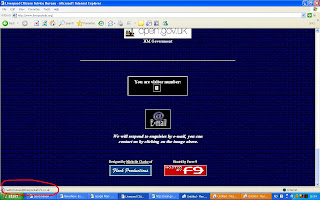
You write, that you have checked yourself, that the e-mail address, listed
onwww.liverpoolcab.org, now is the right e-mail address.
But I checked it now, I went to the website, and pressed the e-mail-button.
Then outlook opens, and the e-mail address that one get up, is:
bureau@liverpoolcab.f9.co.uk
and not the right e-mail address (bureau@liverpoolcab.org), like you write
in your report.I’m enclosing a screenshot, from the Liverpool Central CAB website, from
today, that shows this.52.
You say that the complaint was dealt with fairly.
But I don’t agree with this.
Due to these reasons:
1:
The CAP-representative, said that the whole meeting there, on 5/4, was held
with the lights on.But I explained, to the Chair there, that this was a lie.
Since, he waited until the meeting was almost finished, before he switched
the lights on.And before this, it wasn’t possible to read in the area.
The fact, that the representative, read the fax-number, from the phone list,
instead of the
phone-number, to EAD, I think shows this, that the representative lied.But this fact, that the representative lied, has been ignored, by the Chair
there, thats Chairman of
the Board then, I presume. And by the CAB Chief Executive.I don’t think this is very fair.
2:
Further, you write, that e-mails were answered late.
But some e-mails, like the ones I sent the Comlaints Manager there, Follows,
weren’t answered at all.This isn’t reflected on, as far as I can see, in your report.
3:
And what about the problems with the automated reply.
Or the ‘magic’ automated reply, would maybe be a better description of the
nature of this reply.Since the automaded reply, waited, from 16/8, untill 22/8, before it found
it right to send itself.Isn’t this a bit strange, that the CAB headoffice, is operating, with
seemingly ‘magic’ automated replies?Why didn’t the Chief Executive reflect on this at all?
Even if I made a point of it, in the compaint.
So I don’t agree with you, that the complaint was dealt with fairly.
And I also think also you yourself, should have maybe reflected more on, at
least, point 1 and 3 here, in your report,
since I made a point out of these issues, in my remarks, regarding the Stage
3 report, from the Chief Executive.These are the issues that comes to mind, from reading your report now.
So I thought I’d send you them, so that you could be aware, of the obvious
errors you’ve made, with the Liverpool
Central CAB’s e-mail address, on their website, which you write that you
have checked, and you say it’s now
the right address, which it isn’t.And the error, when you write, that my second e-mail to the Chief Executive,
was sent on the same date, as the
(‘magic’) automated reply, was sent back (22/8), when the e-mail was in fact
sent on 16/8. (And not on 22/8,
like you write in your report).So these are obvious errors, to do with obvious facts. So I don’t think this
can be disputed.The other issues, surrounding that the lie from the CAB representative,
isn’t reflected on.That the fact that the meeting there, was held in the dark, isn’t
acknoledgded, even if I make a point of it in the
answers to the various reports, I think is worrying.Since I explain what happened around this in detail.
That I explain that the CAB representative read the fax-number to the
EAD-company, instead of the phone-number.So it shouldn’t really be any doubt regarding if the meeting there, was held
in the dark or not.I also explained, that there seemed to be some kind of ‘Street Theather’,
arranged there, at the Liverpool Central CAB.That it seemed that there was a planned Street Theather operation, set up
there, in connection with my meeting there
on 5/4, last year.This isn’t taken seriously.
I think this is probably something to do with, that I have been in contact,
with the Liverpool Police, regarding something
I overheard, when I was working in Norway, that I was followed, for some
reason unclear to me, by some mafia.(Possibly due to some honour-stuff, due to some misunderstandings, with a
collegue there, in the township, that the
shop I worked as part-time team-leader in, besides my University level
studies).When I got to Liverpool, I overheard that the Police-officer, that I
explained to, that I was followed, said on the back-office,
on St. Ann St. Police Station there, that ‘don’t he understand, that noone
wants to be involved’.I think, that the British Police, after this, that they sent me out of the
Police-station, without leting me explain properly,
about this, why I thought I was being followed, have been having some type
of survailance operation, around me.And that this Street Theater operation, at the CAB, last year, was part of
this Police surveilance operation.So that the whole meeting there, wasn’t a proper meeting at all, just some
kind of phoney set-up.I don’t think this is right.
Because since Norway are part of the EU-market, then Norwegian citizens have
the right, to work and live in Britain.And I have paid tax to the UK government, and to the Council.
So I don’t think it’s right that my rights should be ignored, in a way like
this, since the Police want’s to have some
kind of set-ups, like it seems.Anyway, how this is, I can’t see that this is reflected on in your report.
But I suspect, due to the mistakes in your report, that I’ve mentioned, and
due to the many things you just ignore in it,
and fail to reflect on.Due to this, I also suspect that your report, could be part of this phoney
Police operation, or what this all is.So I think this is very poor.
That the organisation, and system, around the CAB, that is supposed to work
for making sure that peoples rights are
respected, just play games with peoples rights in a way like this.Since I think it has to be something phoney going on here, since the whole
CAB process around the meeting and
the complaint, is obviously corrupt.So the reason that I’m writing this e-mail, isn’t really because that I
think something will be done regarding the
serious issues I’ve been pointing at here.But I’m planning to publish my e-mail on my blog, so then at least, I’ll be
able to deal with this in that way, that
I at least get this published, so that maybe someone reads this, and maybe
react or reflect on what’s going on.So that’s really why I’m writing this e-mail.
Just to explain about this.
Hope this is alright!
Yours sincerly,
Erik Ribsskog
On 4/24/08, Barbara Stow
>
> Dear Mr Eribsskog
>
> I enclose the report of my review of your complaint.
>
> I have also sent it to Citizens Advice. They will write to you within the
> next two weeks when they have considered the report.
>
> Yours sincerely
>
>
> Barbara Stow
> Independent Adjudicator
>
>
> —– Forwarded Message —-
> From: Barbara Stow
> To: Erik Ribsskog
> Sent: Friday, 18 April, 2008 12:12:35 PM
> Subject: Fw: Citizens Advice
>
> Dear Mr Ribsskog
>
> When I wrote to you on 1 April I said that I hoped to complete my review by
> today, 18 April.
>
> I have almost done so but I am not yet quite ready to send the report.
>
> I am sorry for the delay. I will write to you again not later than the end
> of next week.
>
> Yours sincerely
>
> Barbara Stow
> Independent Adjudicator
>
>
>
>
> —– Forwarded Message —-
> From: Barbara Stow
> To: Erik Ribsskog
> Sent: Tuesday, 1 April, 2008 1:05:32 PM
> Subject: Citizens Advice
>
> Dear Mr Ribsskog
>
> I am the independent adjudicator for the Citizens Advice service and I
> write to confirm that Saffron Follows, on behalf of David Harker, has asked
> me to review how your complaint has been dealt with. I am writing by e-mail
> as I understand this is your preferred means of communication.
>
> I will consider whether your complaint has been dealt with in line with the
> Citizens Advice national complaints procedure and fairly. I have no
> authority to say whether your complaint justified. My task is to say
> whether it has been considered properly.
>
> Ms Follows has sent me the correspondence about your complaint. This
> includes the e-mail message of 14 March to David Harker in which you
> accepted the offer that someone independent could look at your complaint.
>
> If there is anything more you would like to say to me about why you are
> unhappy with the way your complaint has been considered, please let me know
> at the e-mail address above.
>
> I hope to be able to complete my review by 18 April. If I have not heard
> from you by 11 April I will assume that there is nothing you want to add to
> what you have explained already.
>
> Yours sincerely
>
> Barbara Stow
> Independent Adjudicator
>
>
>
>
>
> -
Report from the CAB-case Independant Adjudicator, enclosure sent with e-mail from 24/4/08. (Converted from PDF).
REPORT BY THE INDEPENDENT ADJUDICATOR
INTO A COMPLAINT ABOUT
LIVERPOOL CITIZENS ADVICE BUREAU
INTRODUCTION
1. National Citizens Advice has asked me to review how the
service has dealt with a complaint about Liverpool CAB.
2. The Citizens Advice Service has a national complaints
procedure. It is set out in a guidance note for member bureaux
and summarised in a leaflet for members of the public.
Complaints are first considered inside the Citizens Advice
service. If a client is not satisfied with the response, they can
ask me to review how their complaint has been dealt with. I do
not have any authority to comment on the substance of a
complaint or to say whether it is justified. My task is to say
whether the service has followed the complaints procedure and
acted fairly. If I find that the procedure was not followed or that
the matter has not been handled fairly, I say why and may give
directions for a re-investigation.
3. In this report I will summarise the background to the complaint.
I will then look at the complaints procedure and the sequence
of events to show whether the complaint has been dealt with in
compliance with it. I will then turn to the content of the
complaint and the replies so that I can see whether the
complaint has been dealt with fairly. To protect the
2
complainant‘s confidentiality I refer to him throughout this
report simply as ”the client‘
BACKGROUND TO THE COMPLAINT
4. The complaint is about the client‘s requests for advice in the
period February to April 2007. Until the client made his
complaint in May 2007, the bureau‘s only record of their
dealings with him was a brief note made by a solicitor on 27
February 2007. Apart from this, I have relied on the client‘s
own papers and the correspondence about the complaint to
understand the background.
5. It seems that the police advised the client to go to a citizens
advice bureau. The client had reported problems with a former
employer. He believed the company had been infiltrated by
persons who were engaged in crime and harassing him. He
had also asked for advice about the job centre, since his
eligibility for unemployment benefits depended on why he had
left that employment.
6. On 19 February 2007, the central Liverpool bureau arranged
for the client to see a solicitor at the bureau on 27 February.
The session was not long enough for the client to explain the
problems fully. The solicitor‘s note says that the client might
have a harassment claim but she had advised that it might be
preferable for him to consult someone who could advise on the
criminal aspect, too. She would discuss this with a colleague.
The client says that, after the interview, the solicitor wrote to
3
him from her firm and said that they could help with a complaint
of harassment and the charges would be £140 per hour.
7. On 20 March, the client went back to the bureau to ask about
legal aid and the circumstances in which he would need a
solicitor who was expert in criminal matters. The bureau has
no record of the client‘s visit on 20 March but agrees that they
arranged for him to speak to a solicitor on the telephone.
Neither the bureau nor the solicitor told the client the solicitor‘s
name or firm. The solicitor said that the client would need a
solicitor expert in criminal matters only if he was charged with a
criminal offence. Otherwise, crime was dealt with through the
police. The solicitor referred the client to the Community Legal
Service‘s Legal Aid Calculator, to find out whether he was
eligible for legal aid. However, when the client looked into this,
he found that because he was self-employed the calculator did
not help. It said he would need to go a legal adviser for advice
about eligibility and the place to get advice was the CAB.
8. So the client went back to the CAB, who arranged an
appointment with a solicitor at the bureau for 5 April. Before
the appointment, the client went back to the solicitor he had
seen in February. She told him that her firm never got legal aid
for employment cases and only accepted payment from private
funds. The client felt confused and decided to attend the
appointment at the CAB and contact the firm again after that.
9. On 5 April the client arrived in time for his appointment at 1.30.
It was lunchtime and the bureau was closed, but he was
admitted after —buzzing“ twice. The client says he was left
4
alone in the reception area for some minutes and the area was
poorly lit. The bureau unit coordinator then arrived and
explained that the solicitor who was expected to attend had
cancelled. He gave the client a telephone number and
suggested he telephone the firm and ask if they could help by
telephone. The coordinator did not know the name of the
solicitor who had cancelled. Again the bureau has no record of
the client‘s visit.
10. The client went home and tried to telephone the firm but the
number did not work and the firm was not listed in the yellow
pages. He telephoned the CAB and was given the correct
number. The number he had been given was a fax number.
The client telephoned the firm again. His call was transferred
to a legal adviser who said: his complaint was outside the three
month time limit though the employment tribunal could extend
its time limits in exceptional circumstances; only the solicitor
dealing with the case could advise about legal aid; and the firm
took only trade union cases. The solicitor gave the client
details of a firm that acted on the basis of contingency fees.
11. On 10 April, the client contacted the solicitor he had previously
met at the bureau who said that the time limit for harassment
cases was longer than three months. He expected the firm to
contact him but they did not do so. When he approached them
again on 24 April he was told: it would cost £250 for an
interview; there could be no payment plan; his case was not an
employment case; and he could approach the Law Society.
5
THE COMPLAINTS PROCESS
The procedure at Stage One
12. The first stage of the national complaints procedure is a review
by the bureau concerned. The procedure stipulates, among
other things:
Once a complaint has been received, a letter of
acknowledgement must be sent to the complainant within five
working days. The complainant must be told who is dealing
with the complaint, what action is being taken, and when s/he
can expect to receive a full reply œ the target time is 20 working
days. If it is unlikely that this target will be met, then the client
must be informed in writing and given an indication of when the
review will be complete.
The bureau manager should undertake the investigation œ or
oversee it if it is carried out by another member of staff. If the
complaint is against the manager then the chair or a
designated member of the bureau trustee board will need to
investigate, in effect jumping straight to Stage Two.
If the matter is complex and will take longer than originally
indicated, write to the complainant explaining the reasons why
and including an indication of when a response can be
expected.
The full response to the complaint must inform complainants of
their right to ask for a review of the investigation if they are not
6
satisfied with the outcome of Stage One and of how to access
the second stage
13. The guidance for bureaux contains a checklist of good
investigative practice. Among other things, this says:
Ensure that the person undertaking the investigation is not
implicated in the complaint.
What happened at Stage One
14. On 18 May, the client telephoned the complaints officer at
national Citizens Advice and on 23 May he sent her his
complaint by e-mail with other material by post. The
complaints were specified within a lengthy document that also
included much information about the client‘s concerns about
the employer and other related matters.
15. The complaints officer attempted to contact the Liverpool
bureau coordinator by phone but they kept missing each other
and on 29 May she forwarded the complaint by e-mail. The
coordinator replied next day that he had located the file and
remembered meeting the client. On 31 May, the complaints
officer sent the complaint to the bureau manager to handle in
accordance with the standard complaints procedure. The
same day the complaints officer e-mailed the client to say that
the bureau manager would investigate and send her findings in
20 working days.
16. On 5 and 27 July, the client e-mailed the complaints officer to
say he had received no answer from the bureau. On 3 and 22
7
August, the client e-mailed the chief executive of Citizens
Advice to say he had received no answer. The first
communication he received after the complaints officer‘s e-mail
of 31 May was an automated reply from the chief executive‘s
office on 22 August saying that he would be away from the
office until 30 August.
17. On 28 August, the complaints officer e-mailed the Liverpool
coordinator about the complaint. He replied that he had
investigated and recently forwarded his findings to the bureau
manager who was on leave until later that week. On 6
September the coordinator sent a full reply to the client,
commenting on each aspect of the complaint. He sent a copy
of the reply to the bureau manager and concluded by saying
that if the client was not satisfied he could ask for a review by
the Chair of the bureau whom he could write to at the bureau‘s
address.
The procedure at Stage Two
18. Stage Two of the complaints process is a review under the
direction of the bureau trustee board. The procedure says that
the process to be followed is similar to the process for Stage
One but the lead person conducting the review is the Chair of
the board or a designated sub-committee. The same target
timetable applies as at Stage One, namely five days to
acknowledge a request and 20 working days to complete the
review. The complainant must be informed that if they are not
satisfied with the outcome of the review they can ask for a
further review under the direction of the Citizens Advice chief
8
executive by writing to the chief executive at the Citizens
Advice Central Office.
What happened at Stage Two
19. On 7 October the client e-mailed the bureau at
bureau@liverpoolcab.f9.co.uk, an address that the client says
he obtained from the bureau website, and asked what e-mail
address he should use for the Chair. The message bounced
back as undeliverable. On 8 October he e-mailed the
coordinator, repeating the request and explaining that he had
tried to send a message to the address on the website but it
was not working.
20. The coordinator replied on 22 October. He apologised for the
delay and explained he had been out of the office for two
weeks. He provided another e-mail address,
bureau@liverpoolcab.org. On 27 October, the client e-mailed
the Chair at that address, asking him to review the complaint
and explaining under each point why he was not satisfied with
the coordinator‘s response.
21. On 26 November, the client e-mailed the Chair at the bureau
again as he had received no reply to his request of 27 October.
22. My copy of the Chair‘s reply is not dated but I am told it was
sent on 14 December. The Chair commented on each of the
points in the complaint and ended by saying that the client
could ask for a further review under the direction of the chief
executive of Citizens Advice by writing to the complaints officer
at the national office.
9
The procedure at Stage Three
23. The procedure states that the aim of this stage of the
procedure is to check that the fundamental issues have been
explored and the process followed properly. The Stage Three
review will not comment on the advice given. It is conducted
under the direction of the chief executive but delegated to an
appropriate individual.
24. On receiving a request, Citizens Advice will acknowledge it
within five working days and explain the purpose of the review.
The bureau should send the file to the Central Office within five
days of a request and the target time for communicating the
outcome of the review is 20 working days from receipt of the
file. The letter should explain that the complainant can ask for
a review by the independent adjudicator and the remit of such
a review.
What happened at Stage Three
25. On 11 February, the client e-mailed the Head of Advice Policy
and Standards. He said he had not contacted the complaints
officer, as the Chair had advised him, because she had not
answered the e-mails he sent in July when the bureau did not
answer within the promised timescale. He therefore sent the
Head of Advice Policy the details of his complaint.
26. The complaints officer obtained from the bureau a copy of the
Chair‘s reply to the client, the earlier correspondence about the
complaint and the solicitor‘s case note from 27 February 2007.
On 18 February, she e-mailed the client to confirm that a
review would be conducted under the direction of the chief
10
executive, that it would focus on how the complaint was
handled locally, and a full response would be sent by 14 March
or any delay explained.
27. The complaints officer sent the client the chief executive‘s
review on 14 March. The chief executive‘s letter ended by
explaining the availability and purpose of a review by the
independent adjudicator.
Stage Four
28. The client replied to the chief executive in two e-mails on 14
March. He said that he would like to have an independent
review as there were a number of points that still troubled him.
He explained what these were.
29. I received the file by post on 20 March, the day before the
Easter weekend. I e-mailed the client on 1 April inviting him to
contact me by 11 April if he wished to add any more
information. I have not heard from him.
The question of fairness
30. I have explained that it is not for me to say whether a
complaint is justified or whether I agree with the response. In
considering whether a complaint has been treated fairly, I look
to see whether it has been treated seriously, whether those
responding have taken trouble to understand the complainant‘s
point of view, and whether the replies are consistent with any
other material, such as case records. If there is a conflict
about the facts, I want to be sure that the complainant has had
a fair hearing and that the responses are not unfairly
11
prejudiced in favour of what the staff say rather than what the
complainant says. I also bear in mind that what usually
happens is not necessarily what happened on a particular
occasion.
31. It is also right to say that I look for a proportionate response,
taking into account the bureau‘s resources and the other
demands on these. The complaints procedure is not a court of
law. I do not expect a forensic examination of every difference
of recollection. It is not unusual for different people genuinely
to remember the same events slightly differently. Overall, I
expect bureaux to approach criticisms with an open mind, not
defensively, and to reflect the principles stated in national
complaints procedure that:
Citizens Advice and all Citizens Advice bureaux take
complaints seriously. Complaints give us the opportunity to put
things right and the lessons learned can often influence bureau
practice.
32. I have set out below a brief summary of the client‘s complaints,
the responses he received at each stage and his comments on
those responses.
33. In connection with the interview with the solicitor on 27
February, the client says that the bureau should have
explained the legal aid scheme to him before the interview, that
he was not told that the interview was limited to 30 minutes,
and that he ought to have been told that the solicitor‘s firm did
not accept money from legal aid.
12
34. At stage one, the coordinator said that it was the bureau‘s
usual practice when booking appointments with the duty
solicitors to make clear that it was a —free first half hour“ and
they did not take responsibility for advising clients about their
legal aid entitlements when booking solicitor appointments.
The bureau was not responsible for the actions of the solicitor
after the first half hour at the bureau.
35. In connection with his visit to the bureau on 20 March, the
client says that he was not given sufficient opportunity to
explain the two issues on which he wanted advice. He was
simply given access to speak to an unidentified private solicitor
on the telephone and no adviser was available to speak to him
when he came off the telephone.
36. The coordinator‘s reply said that it was not the bureau‘s
responsibility that the solicitor did not give her name. It was
probable that no adviser had been available to see the client
on 20 March so he had been allowed to talk to a solicitor and
referred to the legal aid calculator as at least some
”signposting‘ advice.
37. In connection with the arrangements for legal advice on 5 April,
the client said that when the duty solicitor was not available at
the time of his appointment he would have preferred an
alternative appointment to see a duty solicitor at the bureau
instead of being given a phone number (which was wrong) and
no reference or contact details to quote when he telephoned
the firm. Moreover, the solicitor he spoke to said he could not
advise about legal aid on the telephone and the client
13
understood (wrongly as it turned out) that the firm was not
based in Liverpool.
38. The coordinator said that there was no alternative appointment
available until May, whereas duty solicitors who cancelled
usually saw or spoke to the clients who had appointments
either the same day or shortly afterwards. He said he had
been conscious that time limits were important in employment
cases. The coordinator said he did not know the name of the
solicitor who should have attended. The firms sent different
representatives and the firm had telephoned to say no one was
available. The bureau left the question of legal aid eligibility to
the solicitors. The coordinator apologised for giving the client
the fax number by mistake. He said the firm was in Liverpool
3.
39. In connection with his reception at the bureau on 5 August, the
client said that the fact that the bureau seemed to be closed
and was poorly lit, and the fact he was left alone in reception
for some time, gave an unprofessional impression.
40. The coordinator said that the lights were partly off as the
bureau was closed for lunch and he had switched them on
when he began speaking to the client. He acknowledged that
perhaps they should have been fully switched on to create a
professional atmosphere.
41. In his request for a review by the Chair, the client
acknowledged the apology about the fax number and that the
solicitors‘ firm he spoke to when his appointment was
14
cancelled was based in Liverpool. He explained why he had
thought otherwise. He reiterated that he felt he should not
have been left to phone the firm without some form of contact
details and would have preferred another appointment. He
said that as he was unemployed it should have been obvious
to the bureau that he ought not to have been referred to a
solicitor who only took work that was privately-funded. He said
he had not been told that the free interview was for only 30
minutes. When a solicitor telephoned him at the bureau on 20
March, the adviser had not let him explain properly what he
needed and the client thought it wrong that a solicitor
telephoning him at the CAB did not introduce herself, in case
there was any future problem about possible wrong advice. He
did not agree that the coordinator had turned on the lights
immediately and he explained his memory of what happened.
He related other incidents that occurred at the bureau and on
his way there and afterwards which, in combination with his
reception at the bureau, had made him uneasy.
42. In his review, the Chair set out his understanding of the
complaint under nine main points. He emphasised that the
coordinator did not book a fresh appointment when the solicitor
cancelled on 5 April because of the risk that the client would
miss legal deadlines. He explained that the solicitors who
attended the bureau did so on a voluntary basis through their
firms and the bureau usually knew only the name of the firm,
not who would represent them any particular occasion. He
apologised for any unprofessional impression created by the
lights being partly switched off. He said it was the solicitor‘s
15
responsibility, not the bureau‘s, to inform clients about legal
aid.
43. The chief executive‘s review summarised the sequence of
events following the client‘s meeting with the duty solicitor in
February. He then gave his conclusions, expressing concern
about delay in dealing with the complaint at stage one and
stage two, and the absence of case records documenting the
client‘s dealings with the bureau, and he acknowledged the
lack of responsiveness from the Central Office to the client‘s e-
mails in July and August. He apologised both for delays in
dealing with the initial complaint and the lack of response from
Central Office and said he certainly upheld the complaint in
those respects. He said, however, that he believed the bureau
had responded fully to the issues in the complaint. He
commented that bureaux have to find ways of coping with the
demand for their advice services and it was not inappropriate
for bureaux to work closely with local solicitors to help provide
advice.
44. In his request for an independent review, the client explained
that his reception at the bureau on 5 April had made him
uneasy, partly because of other incidents on the way to the
bureau and afterwards. He explained that because the police
had advised him to go to the bureau to get the issues heard in
the Crown Court he had thought that the service was part of
the Government and everything would be free. If he had
known that he would have to pay for solicitors, he would have
gone back to the police and complained. He suspected a plot
between the CAB and the police to obstruct his case. The
16
client said that the advice from the two firms of solicitors was
contradictory. The second firm said his employment case was
too late but the first firm said there was a longer time limit for
harassment cases.
ADJUDICATOR‘S CONCLUSIONS
45. I am asked to say whether this complaint has been dealt with in
line with the national complaints procedure and fairly.
46. The time limits for correspondence were not complied with.
The chief executive acknowledged this and apologised, but the
failure was spectacular. The procedure says that complaints
will be acknowledged in five working days and a full response
sent in 20 working days or an explanation given. Apart from an
automated ”out of office‘ response, no communication was sent
to the client from 31 May until he received an e-mail from the
coordinator a full three months later on 6 September. And this
was despite the client‘s four courteous enquiries in July and
August.
47. At the second stage (for which the target times are similar), the
client‘s request reached the bureau on 27 October. There
appears to have been no acknowledgement, and the full reply
was sent some six weeks later.
48. I do not know why the service, both locally and nationally,
neglected to reply to the client, as common courtesy, never
mind the procedure, required. It may be because the client
preferred to communicate by e-mail rather than by post that the
17
messages ”slipped through the net‘ and the usual standards
were not observed. But e-mail is increasingly used in place of
formal letters. Organisations have to adapt to ensure that e-
mails are subject to the same deadlines and disciplines as
letters would be.
49. There is one respect in which the procedure might be clearer.
When the complaints officer refers a complaint to be dealt with
locally at stage one, in my experience, the bureau usually
sends a letter of acknowledgement to the complainant,
explaining what will happen and when. I think it desirable that
they should, but perhaps the Liverpool bureau thought the
message to the client from the complaints officer was sufficient.
When next the guidance is reviewed, Citizens Advice may wish
to make sure that it is clear whether bureaux are expected to
send their own acknowledgement to complainants when a
complaint has been referred by the central office.
50. The stage one response also departed from the procedure in
another respect. The procedure states that the first stage
investigation will normally be by the bureau manager and that
the person undertaking the investigation should not be
someone who is implicated in the complaint. The complaint
was in part about the actions of the coordinator. According to
the procedure, the coordinator should not have been
responsible for the stage one reply.
51. None of the correspondence from Citizens‘ Advice mentions
the e-mail address that the client used unsuccessfully to try to
contact the Chair, and which he says he obtained from the
18
website. I do not know why the problem occurred but I see that
the e-mail address currently listed on the website for the
bureau is the correct address.
52. Was the complaint dealt with fairly? I am sorry to say that I
think the delays and failures to reply to correspondence in
themselves amount to unfair treatment towards a client who
was obviously worried. That apart, when replies were sent,
they all seem conscientious, thorough and fair. The client has
commented on his experience of the service. He does not find
some of the explanations he has been given satisfactory but
that does not mean they are unfair. It is however helpful for
any public service to see a customer‘s eye view.
ADJUDICATOR‘S RECOMMENDATIONS
53. Although there were deficiencies in how the complaint was
dealt with, there is no reason for me to ask for any further
investigation of it. However Citizens Advice may wish to:
• ensure that when the guidance is next reviewed it is clear
as to whether bureau should send their own
acknowledgement to complainants at stage one of the
procedure when the complaint has also been
acknowledged by central office;
• consider why the client‘s messages were left so long
without reply and whether any additional advice or
19
protocols are required when complainants communicate
by e-mail.
Barbara Stow
Independent Adjudicator 24 April 2008
-
E-mail from the CAB-case Independant Adjudicator, 24/4/08.
From: stow_adjudicator@btinternet.com Barbara Stow
To: eribsskog@gmail.com Erik Ribsskog
Date: Thu, 24 Apr 2008 15:44:25 +0100
Subject: Fw: Citizens AdviceDear Mr Eribsskog
I enclose the report of my review of your complaint.
I have also sent it to Citizens Advice. They will write to you within the next two weeks when they have considered the report.
Yours sincerely
Barbara Stow
Independent Adjudicator—– Forwarded Message —-
From: Barbara Stow
To: Erik Ribsskog
Sent: Friday, 18 April, 2008 12:12:35 PM
Subject: Fw: Citizens AdviceDear Mr Ribsskog
When I wrote to you on 1 April I said that I hoped to complete my review by today, 18 April.
I have almost done so but I am not yet quite ready to send the report.
I am sorry for the delay. I will write to you again not later than the end of next week.
Yours sincerely
Barbara Stow
Independent Adjudicator—– Forwarded Message —-
From: Barbara Stow
To: Erik Ribsskog
Sent: Tuesday, 1 April, 2008 1:05:32 PM
Subject: Citizens AdviceDear Mr Ribsskog
I am the independent adjudicator for the Citizens Advice service and I write to confirm that Saffron Follows, on behalf of David Harker, has asked me to review how your complaint has been dealt with. I am writing by e-mail as I understand this is your preferred means of communication.
I will consider whether your complaint has been dealt with in line with the Citizens Advice national complaints procedure and fairly. I have no authority to say whether your complaint justified. My task is to say whether it has been considered properly.
Ms Follows has sent me the correspondence about your complaint. This includes the e-mail message of 14 March to David Harker in which you accepted the offer that someone independent could look at your complaint.
If there is anything more you would like to say to me about why you are unhappy with the way your complaint has been considered, please let me know at the e-mail address above.
I hope to be able to complete my review by 18 April. If I have not heard from you by 11 April I will assume that there is nothing you want to add to what you have explained already.
Yours sincerely
Barbara Stow
Independent Adjudicator -
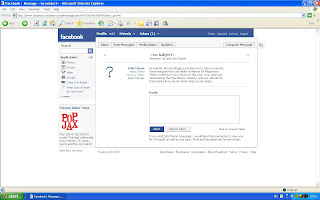
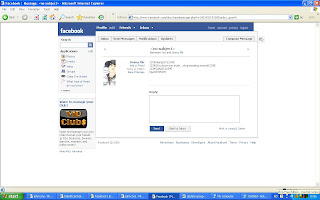
Kar på Facebook, som ikke var på telefonkatalogen online, og som skifta skrivestil, og var født i 1913, var det vel. (In Norwegian).
Hei,
Between Jørgen Brattli and You
Today at 2:18pm
det dukka opp en sånn friend request her. Er det i forbindelse med noe blogg, eller noe, eller?
Med vennlig hilsen
Erik Ribsskog
Today at 2:21pm
halla, blogg? syns det være morsomt at du skrev så mye på martinegruppe la deg som freind! halla jeg er Jørgen hva skjera?
Loading…
Today at 2:38pm
Okey,
det har skjedd et par ganger at det dukka opp friend requester på grunn av bloggen osv.
Det er denne linken:
https://johncons-blogg.net/
Jeg driver med noe jobb osv nå, men bare si fra hvis det er noe jeg har glemt å forklare.
Jobber du som kokk eller, siden jeg synes det så ut sånn på bildet?
Med vennlig hilsen
Erik Ribsskog
Today at 6:21pm
stemmer det, påein resturang i sentrum…hva har do glemt og forklare?
Today at 6:27pm
Hei,
jeg var litt stressa her, så så jeg at han ene på bildet hadde noe på hue, så tenkte jeg at han var kokk, og at det kanskje var deg.
Men jeg ser jo nå, at det en kartong til en six-pack øl, hvis jeg ser riktig.
Så du jobber på en resturant i sentrum ja.
Hvilken resturant jobber du på da, bare for nysgjerrighetens skyld.
Med vennlig hilsen
Erik Ribsskog
Today at 6:40pm
VCTOR, men stemmer at det er en ølkartong ass
hva jobber du som daa?Today at 6:42pm
Hei,
jeg jobber som company researcher.
Med vennlig hilsen
Erik Ribsskog
Today at 6:45pm
aha veldig colt, hva være det for no? lol
liker do musik?Today at 6:47pm
Hei,
jeg synes forresten, at du skifter litt skrivestil osv.
Og du er visst ikke på telefonkatalogen online.
Og du er født i 1913 står det, på Facebook-siden din.
Så jeg tror det er best å poste deg på bloggen.
Siden det var så mye rart.
Bare for sikkerhets skyld.
Håper dette er i orden!
Med vennlig hilsen
Erik Ribsskog
Today at 6:50pm
hæ?
http://www.facebook.com/inbox/readmessage.php?t=12035437459&mbox_pos=0
-
Research om Trond Giske. (In Norwegian).
Research om Trond Giske. 23.04.08 16:14
(Svar til: Aftenposten)
consIkke registrertJeg har hatt noe problemer, med myndighetene i Norge.
At jeg ble jaget vekk fra gården til onkelen min, i Kvelde i 2005, av noen folk med våpen og hunder osv.
Og etter det, så har jeg prøvd å kontakte Kripos, politidirektoratet, Justisdepartementet, ambassaden i London, konsulatet i Liverpool (hvor jeg bor), UD, SMK, Amnesty i Norge, osv., osv., Fylkesmannen i Oslo og Akershus, Sivilombudsmannen osv.
Men det er ikke noe hjelp eller råd, å få, fra noen av de.
De svarer ikke på e-post, og returnerer ikke telefoner, osv.
Så jeg har begynt å skjønne, at det er noe som ikke er helt som det burde være i Norge, siden det virker som at ingen i offentlig administrasjon, gjør jobben sin, av en eller annen anledning.
Så jeg har prøvd å ha det i litt i bakhodet da, hva det kan være som er galt i Norge.
Og i den forbindelse, så leste jeg i fjor en gang, at noen skrev på et debattforum var det vel, at Trond Giske hadde vært full på Stortinget.
Så da tenkte jeg, at kanskje det var noe lureri med han, fordi det er vel sånn man ikke gjør, uansett om man er ‘Party’-minister, eller ikke.
Så jeg gjorde litt research om han da, på nettet, en dag her i fjor.
Og da fant jeg mye rart.
Så jeg lurer litt på, hvor lurt det er å gi han der mer makt, som artikkelen handler om.
Uten at jeg har satt meg inn i detaljene i den saken.
Her er de linkene. (Det er kopiert fra debattforum, så man må scrolle litt ned, for å lese postene, pga. av at layouten på blogg-posten, ble litt rar, pga. noe problemer med pastingen osv.).
Her er i hvertfall linkene:
>https://johncons-blogg.net/2007/12/tittel-p-tema-trond-giske-en-edderkopp.html
https://johncons-blogg.net/2007/12/linj-tr-enkel-grenet-tr-cons.html
Med vennlig hilsen
Erik Ribsskog
http://debatt.aftenposten.no/item.php?GroupID=14&ThreadID=232737&page=1#item3596628